Ride, cushioning and performance
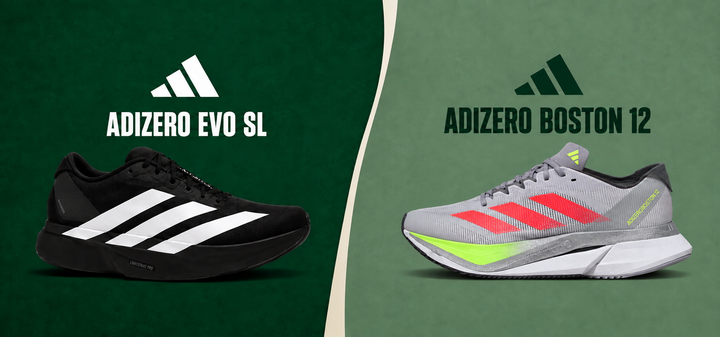
The EVO SL measured 36.1mm at the heel and 28.1mm at the forefoot, compared with 28.0mm and 21.5mm for the Rebel v4. The Rebel is about 10g lighter, but the Adidas provides 8.1mm more heel stack, 6.6mm more forefoot stack and 11.2 percentage points more heel energy return. Lightstrike Pro therefore feels firmer, springier and more protective, while the softer FuelCell midsole feels lower, more flexible and closer to the ground.
The Rebel instead invests its weight in width: its platform is 8.4mm wider at the forefoot and 14.2mm wider at the heel. Choose the EVO SL for cushioning depth and rolling momentum; choose the Rebel v4 for a broad footprint, toe flexibility and a more natural transition.
The EVO SL is the faster and more versatile shoe overall. Its rebound and forefoot protection suit sustained tempo runs, progression sessions and longer races. The Rebel feels agile for strides, fartlek and short intervals, particularly for runners who dislike stiff or rocker-led shoes. Both can race 5K, but Adidas has the advantage at 10K, half-marathon and marathon distances. Neither replaces a dedicated carbon racer.
For easy running, the Rebel's soft, flexible ride works well over shorter relaxed miles. The EVO SL becomes stronger as distance increases because its deeper foam protects the heel and forefoot. Choose Adidas when fatigue causes impact discomfort; choose New Balance when narrow, high-stack shoes feel insecure. Neither is a true recovery or corrective stability shoe.
Stability, fit and upper
The Rebel's flexible heel can feel loose, yet its 124.7mm forefoot and 101.5mm heel create strong passive stability. The EVO SL has more upper structure but places taller foam over an 87.3mm heel. New Balance better accommodates off-centre landings, although neither shoe provides motion control.
Fit depends more on toe shape than the labels “wide” or “narrow”. The EVO SL is slightly wider at the ball but tapers to 71.6mm near the big toe; the Rebel retains 78.4mm and better suits splayed toes. Adidas is generally true to size and easier to secure at the heel. The Rebel can feel short, so consider half a size up only if extra length is needed.
The EVO SL has a short, non-gusseted tongue, while the Rebel's gusseted design improves midfoot hold. Narrow heels may require a runner's knot in the New Balance. Both scored 1/5 for toe-upper abrasion resistance.
Weather, durability and runner suitability
The Rebel recorded better wet-road traction, 0.50 versus 0.40, while the EVO SL performed more consistently in cold testing: its foam became 13% firmer compared with 47% for the Rebel. Choose New Balance for mild, wet pavements and Adidas for colder conditions. Neither suits ice, mud or technical trails.
Outsole durability is good for both lightweight shoes. The EVO SL lost 0.6mm in abrasion testing versus 0.8mm for the Rebel, although their weak toe-upper results deserve more concern than the rubber.
Centred heel strikers, forefoot runners covering longer distances and heavier neutral runners generally gain more protection from the EVO SL. Off-centre landings, splayed toes and runners prioritising ground feel may favour the Rebel's wider base. Their training roles overlap, so most people do not need both. Pair either model with a recovery, stability or dedicated race shoe to create a more useful rotation.
Which shoe should you choose?
Choose the Adidas Adizero EVO SL if:
- You want one shoe for daily, tempo and long runs.
- You value protection and rebound without a full plate.
- You prefer secure heel hold and cold-weather consistency.
 Check Adidas Adizero EVO SL price on Amazon
Choose the New Balance FuelCell Rebel v4 if:
- You need a straighter, roomier big-toe area.
- You prefer a low, soft, flexible ride and broad base.
- Wet-road grip matters more than maximum cushioning.
 Check New Balance FuelCell Rebel v4 price on Amazon
Frequently asked questions
Which shoe is better overall and which is faster?
The EVO SL is better for most one-shoe buyers and generally faster over sustained tempo work and longer races. The Rebel is more agile for short intervals and better for runners prioritising flexibility, stability or toe space.
Which is better for long runs and marathons?
The EVO SL is the safer general choice because it offers deeper cushioning and higher energy return. The Rebel can cover long distances for efficient runners who have already tested its lower forefoot protection.
Which fits wide feet, and do they run true to size?
The Rebel better accommodates splayed toes, while the EVO SL is marginally wider at the ball but tapers sharply. Adidas is generally true to size; the Rebel can feel short and may require half a size up.
Which is more stable and better in bad weather?
The lower, wider Rebel is more inherently stable and grips wet pavement better. The EVO SL's foam retains its character better in cold weather. Both remain neutral road shoes.
Are they plated, and should you buy both?
Neither uses a full-length carbon plate; the EVO SL has only a small midfoot shank. Their roles overlap heavily, so most runners should buy one and use the remaining budget for a more distinct recovery, stability or race shoe.