Running shoe review
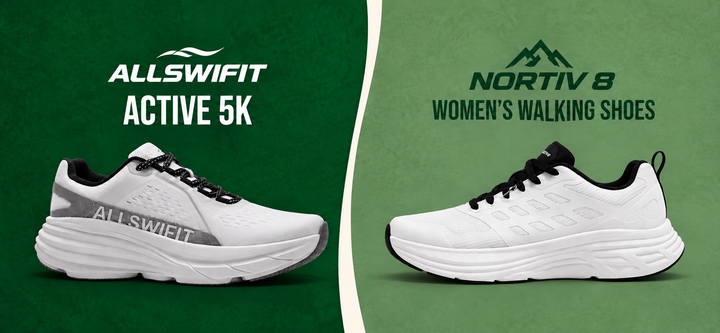
ALLSWIFIT Active 5K Review
Is This Budget Shoe a Hidden Gem?

Best for
All-day walking and long shifts on hard floors
A budget-friendly hidden gem for cushioned walking, long shifts and beginner 5K training. The Active 5K is light, roomy and APMA accepted, but its soft ride is designed for comfort rather than...
Verdosa score
Best for
All-day walking and long shifts on hard floors
Find your pair
View buying optionsWhat we loved
- Soft high-stack cushioning at a budget-friendly price
- Lightweight build for the amount of foam
- Roomy forefoot and removable insole
What could be better
- Soft platform lacks race-shoe precision
- Generous volume may feel loose on narrow feet
- Not designed for technical trails
Verdosa verdict
A budget-friendly hidden gem for cushioned walking, long shifts and beginner 5K training. The Active 5K is light, roomy and APMA accepted, but its soft ride is designed for comfort rather than racing speed.
✓Who should buy it?
- All-day walking and long shifts on hard floors
- Couch-to-5K and easy road running
- Budget shoppers wanting maximalist cushioning
- Medium-to-wide forefeet and orthotic users
−Who should skip it?
- Competitive racing and fast interval sessions
- Technical trails, deep mud and icy surfaces
- Minimalist-shoe wearers wanting ground feel
- People requiring prescribed motion control
Is the ALLSWIFIT Active 5K worth its price?
Yes, for the right problem. The Active 5K makes the most financial sense when expensive shoes feel unnecessary but cheap flat trainers leave your feet tired after several hours. It sits between those two extremes: substantially cushioned and structured, yet still priced like an entry-level Amazon trainer.
Its value improves with frequent use. That is not a durability guarantee, but it explains why this shoe makes more financial sense for regular walking, long shifts or run-walk training than for occasional fashion wear. Its value comes from replacing an uncomfortable everyday shoe, not from promising elite performance at a discount.
There are three reasons the price is unusually persuasive. First, the reported women’s sample weight is approximately 212 g, which is light for such a substantial-looking sole. Second, the removable liner and deep interior make the shoe more adaptable for compatible orthotics. Third, the model carries the APMA Seal of Acceptance—useful reassurance in a price category where construction can otherwise feel uncertain.
Do not buy it merely because it looks like a premium maximalist shoe. Buy it if you need a light, forgiving platform for predictable surfaces and long periods on your feet.


ALLSWIFIT Active 5K specifications
| Feature | What you get | Why it matters |
|---|---|---|
| Price | Current local price shown above | Budget alternative to premium maximalist trainers |
| Weight | Approximately 212 g in a women’s sample size | Reduces the heavy feel common in high-stack shoes |
| Upper | Engineered mesh with ventilation openings | Supports airflow during warm or extended wear |
| Midsole | Soft, high-rebound EVA-based foam | Prioritises impact comfort and easy movement |
| Geometry | High stack with a gentle rocker | Encourages a smooth heel-to-toe roll |
| Insole | Removable contoured sockliner | Creates room for compatible replacement insoles |
| Outsole | Segmented rubber pods and central channel | Adds grip while allowing sections of foam to compress |
| Fit | Generally true to size with a roomy forefoot | Accommodates toe spread and many medium-to-wide feet |
| Certification | APMA Seal of Acceptance | Recognises a design evaluated as promoting foot health |
| Best surfaces | Roads, pavements, treadmills, tracks and indoor floors | Built for predictable rather than technical terrain |
How comfortable is the cushioning?
The midsole is the reason to choose this shoe. It gives an immediately soft step-in feel and enough depth beneath the heel and forefoot to reduce the harsh sensation of repeated contact with concrete or pavement. The foam also has some rebound, so the ride feels less dead than a basic memory-foam walking shoe.
The best description is cushioned and gently springy, not fast. Published rebound figures vary between product materials and platform iterations, so a single percentage is less useful than the practical result. At walking and easy-running pace, the foam compresses willingly and returns enough energy to keep the shoe from feeling sluggish. At faster pace, it lacks the sharp response and controlled stiffness of modern racing compounds.
The curved sole helps the foot roll forward with less effort at toe-off. Because the rocker is gradual, it is approachable for walkers and newer runners who find strongly curved plated shoes unstable. The broad footprint also matters: it gives the tall foam a more planted base and reduces the sensation of balancing on a narrow platform.
Is it good for walking, standing and long shifts?
This is the Active 5K’s most convincing use. Teachers, nurses, retail workers and other people who spend hours on firm floors often need cushioning without the mass of a heavy occupational shoe. The combination of low weight, a padded collar and deep foam is well matched to that demand.
The roomy forefoot is especially useful late in the day, when feet can expand. The upper has fewer rigid pressure points than a leather trainer, and the mesh can accommodate some variation in foot shape. A deep heel seat and structured rear counter help prevent the loose, collapsing feel found in many inexpensive knit shoes.
Comfort should not be mistaken for treatment. The shoe may reduce the jarring sensation that aggravates tired feet, knees or hips, but it cannot diagnose or correct plantar fasciitis, arthritis, heel spurs or significant overpronation. Persistent pain deserves professional assessment. The removable insole is useful because it allows prescribed support to replace the factory liner rather than being stacked on top of it.
Can you run a 5K in the ALLSWIFIT Active 5K?
Yes. It is suitable for couch-to-5K programmes, treadmill intervals that alternate walking and jogging, and relaxed road runs of roughly three to six miles. Its cushioning protects beginners from the hard feel of pavement, while the gentle rocker helps maintain forward movement as fatigue builds.
The name needs context, though. “Active 5K” describes an accessible performance range, not an elite racing specification. There is no rigid plate, highly tuned racing geometry or premium PEBA-based foam. Faster runners may find the soft platform less precise during sharp turns and interval sessions.
For a first 5K, the shoe’s comfort may be more valuable than aggressive propulsion. For repeated racing, marathon training or sub-six-minute-mile work, choose a trainer with firmer control, stronger outsole durability and a more responsive platform.
Fit, sizing and wide-foot suitability
The general fit is true to size, with a rounded toe box that provides more horizontal and vertical room than many fashion-led trainers. That makes it a promising choice for medium-to-wide feet and for wearers who dislike pressure around the little toe or bunion area.
| Your situation | Best starting choice | Reason |
|---|---|---|
| Normal-width foot, everyday walking | Usual UK size | The general sizing consensus is true to size |
| Between sizes with a narrow foot | Try the smaller size first | The toe box and internal volume are generous |
| Medium-to-wide forefoot | Usual size | The rounded forefoot allows more natural toe spread |
| Thick socks or orthotics | Usual size, then assess volume | The removable liner creates additional depth |
| Running rather than walking | Check toe clearance carefully | Feet move and swell more during running |
A roomy toe box does not guarantee a wide fit at every point. People with a high-volume midfoot should also check lace pressure, while narrow-heeled wearers should confirm that the rearfoot does not lift. Try the shoes indoors before committing to outdoor use.
Upper, breathability and lockdown
Openings across the engineered-mesh vamp allow warm air to escape, making the shoe better suited to summer walking and warm indoor workplaces than a heavily padded leather upper. The internal foam creates a soft wrap around the foot without making the forefoot rigid.
Flat woven laces are a sensible choice because they hold tension and are less likely to work loose than slippery round cords. Reinforced eyestays protect the mesh when the laces are tightened. The heel is substantially padded, which reduces direct pressure around the Achilles area, although thick padding can feel warm during hot-weather running.
Despite some easy-entry characteristics, this version still uses conventional laces. It should not be treated as a fully hands-free slip-on unless the specific retailer listing explicitly describes that feature.
Traction, surfaces and durability
Rubber pods cover the main impact zones rather than forming a full, heavy sheet. This helps keep weight down and allows sections of the foam to compress independently. Directional tread provides useful contact on pavement, asphalt, light gravel and common indoor flooring.
The shoe is not designed for wet rock, deep mud, steep loose descents or winter ice. “Non-slip” marketing should never be read as slip-proof. Smooth painted surfaces and polished floors can remain hazardous when wet.
The segmented layout also means exposed foam can show cosmetic wear sooner than a fully rubberised outsole. That does not automatically mean the shoe has failed. Replace it when grip is materially reduced, the foam compresses unevenly or the upper no longer holds the foot securely.
What does the APMA Seal of Acceptance mean?
The American Podiatric Medical Association awards its Seal of Acceptance to products reviewed for their contribution to normal foot health. For a budget shoe, that is meaningful: it indicates that the overall structure and intended use received professional consideration rather than relying only on comfort-focused advertising.
The seal is not a prescription and does not guarantee that the shoe suits every medical condition, gait or foot shape. It should be viewed as a positive supporting credential—not a substitute for individual fit or clinical advice.
ALLSWIFIT Active 5K pros and cons
| Pros | Cons | Buying implication |
|---|---|---|
| High cushioning for the price | Softness reduces fast-paced precision | Best for comfort-led use |
| Light for its substantial profile | Not built for elite racing | Suitable for easy 5K training |
| Roomy, rounded forefoot | May feel loose on narrow feet | Check heel hold indoors |
| Removable insole and useful depth | Factory support may not suit every foot | Compatible replacement support can be used |
| Broad, stable platform | Tall stack reduces ground feel | Keep it on predictable surfaces |
| APMA Seal of Acceptance | Not a medical treatment | Positive credential, not a fit guarantee |
View the ALLSWIFIT Active 5K product details for current UK sizes, price and retailer availability.
A budget-friendly hidden gem for cushioned walking, long shifts and beginner 5K training. The Active 5K is light, roomy and APMA accepted, but its soft ride is designed for comfort rather than racing speed.
ALLSWIFIT Active 5K FAQ
Are ALLSWIFIT Active 5K shoes worth the money?
Yes, if your priority is cushioning for walking, long shifts or beginner 5K training. At the current local price, they offer a strong combination of soft foam, low weight, a roomy fit and a removable insole.
Are ALLSWIFIT Active 5K shoes good for standing all day?
That is one of their strongest uses. The thick cushioning, padded heel and relatively low weight are well suited to extended periods on hard indoor floors, provided the fit matches your foot.
Can beginners run in the ALLSWIFIT Active 5K?
Yes. They suit couch-to-5K plans, treadmill run-walk sessions and relaxed road running. They are not intended for elite racing or high-speed interval work.
Do ALLSWIFIT Active 5K shoes fit true to size?
Generally, yes. The forefoot is generous, so narrow-footed wearers between sizes may prefer the smaller option. Runners should still leave sufficient space beyond the longest toe.
Are they suitable for wide feet or bunions?
The rounded toe box and flexible mesh make them promising for medium-to-wide forefeet and some bunion shapes. Individual width and midfoot volume still vary, so test the fit indoors.
Can the insole be removed?
Yes. The factory liner is removable, and the shoe has enough internal depth for many compatible third-party insoles or prescribed orthotics.
Are ALLSWIFIT Active 5K shoes slip-resistant?
The segmented rubber outsole provides useful grip on common roads and indoor floors, but no shoe is slip-proof. Take extra care on ice, wet paint and polished surfaces.
Are ALLSWIFIT shoes as good as HOKA?
They can satisfy a similar comfort-first need for much less money, but they do not reproduce every material, durability or performance feature of a premium HOKA model. The value comparison is strongest for walking and easy running, not racing.