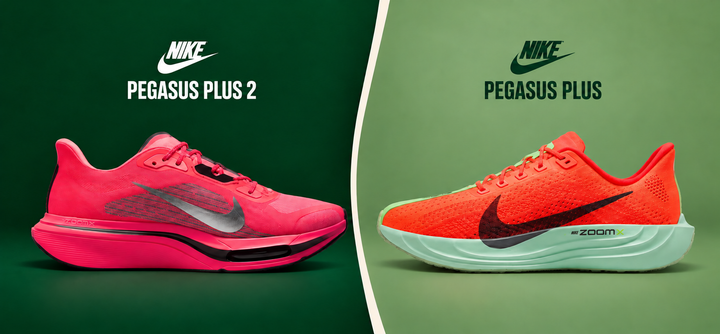
Running shoe review
Nike Pegasus Plus 2 Review
A Better Daily Trainer, but Is It Fast Enough?

Best for
Neutral runners wanting a cushioned road trainer for daily mileage and occasional faster sections.
A cushioned neutral daily trainer with a roomier forefoot and improved lockdown, but its weight and firmer forefoot transition limit its appeal for dedicated speedwork.
Verdosa score
Best for
Neutral runners wanting a cushioned road trainer for daily mileage and occasional faster sections.
What we loved
- Roomier forefoot: several testers report less toe restriction than in older Nike trainers.
- Improved midfoot hold: the revised upper addresses the slipping reported by some original Pegasus Plus testers.
- Cushioned daily ride: ZoomX provides soft rearfoot landings, with enough protection for longer runs in several testers’ assessments.
What could be better
- Weight limits speed appeal: multiple testers find it cumbersome during harder workouts.
- Uneven transitions: some testers notice a step between the soft heel and firmer forefoot.
- Tongue comfort varies: Ben Parkes reports downward sliding and lace pressure.
Verdosa verdict
A cushioned neutral daily trainer with a roomier forefoot and improved lockdown, but its weight and firmer forefoot transition limit its appeal for dedicated speedwork.
✓Who should buy it?
- Neutral runners wanting a cushioned road trainer for daily mileage and occasional faster sections.
- Pegasus fans seeking more forefoot room and improved midfoot hold.
- Runners comfortable with a 10 mm drop who prioritise fit over minimum weight.
−Who should skip it?
- Runners buying primarily for fast intervals or a very light workout shoe.
- Runners needing dedicated stability features or substantial midfoot support.
- Original Pegasus Plus owners specifically wanting its flexible, ground-connected forefoot.
Verdosa review
Best for
Neutral runners prioritising cushioned daily mileage and a roomier Nike fit.
Affiliate disclosure: Verdosa may earn a commission from purchases through this link, at no extra cost to you.
The Nike Pegasus Plus 2 makes its strongest case as a cushioned daily trainer for neutral runners who want more toe room and secure lockdown. ZoomX and forefoot Air Zoom broaden its appeal, but do not guarantee effortless speed. Choose it for daily comfort and occasional faster running; consider alternatives if lightweight interval performance is your priority.
This is a research-based review of the supplied specifications and independent tester reports. Verdosa has not independently wear-tested this shoe.
Specifications
| Specification | Details |
|---|---|
| Category | Neutral daily / performance road trainer. |
| Intended use / distance | Daily miles, long runs and selected marathon-pace efforts; suitability for faster workouts varies by tester. |
| Weight | 270 g, men’s US 10; 226 g, women’s US 8, reported by Doctors of Running. Measurement basis not specified in the supplied summary. |
| Stack height | 38 mm heel / 28 mm forefoot, reported across the supplied review summaries. |
| Drop | 10 mm, reported specification. |
| Midsole | Full-length ZoomX foam with a curved forefoot Air Zoom unit. |
| Plate / rods / stiffening structure | Unplated; forefoot Air Zoom unit adds structure. No rigid midfoot shank reported by Doctors of Running. |
| Upper | Engineered mesh with internal midfoot support and a padded heel collar; tongue construction reports differ. |
| Outsole | Waffle-pattern rubber across heel and forefoot, with exposed midfoot ZoomX. |
| Fit | Testers generally report a roomier forefoot and improved lockdown; Ben Parkes reports true-to-size fit. This does not establish wide-foot suitability. |
| Release date | Not provided |
Does the Air Zoom unit make it fast enough?
It can support faster running, but the reports do not establish it as a dedicated speed trainer. Doctors of Running found the shoe most engaging around marathon pace, with little extra response at threshold effort. Runner’s World described a snappy forefoot push-off, while Ben Parkes found faster running laboured.
A firm push-back can help one runner and obstruct another. Nike’s claimed 18% energy-return improvement over the original does not mean 18% faster running.
If workouts drive your purchase, the supplied reviewers favour the Adidas Adizero Evo SL or Nike Zoom Fly 6 for faster sessions.
Inside the shoe: cutaway video
The Nike Pegasus Plus 2 is cut lengthways to show its internal construction.
Video credit: Foot Doctor Zach.
Is the new fit a meaningful improvement?
The redesign is worth trying if the original upper caused problems. Several reviewers describe more space across the forefoot while retaining a secure midfoot and heel. Doctors of Running specifically contrasts this with the foot movement and friction its tester experienced in version one.
More accommodating does not mean guaranteed wide-foot fit. Check toe clearance and heel hold in running socks. Ben Parkes also reports a short tongue that slips down, particularly with heel-lock lacing, despite more positive tongue assessments elsewhere. Test that setup.
What about long runs, stability and wear?
Several testers find the cushioning protective enough for longer daily runs. Run To The Finish reports testing a 14-mile run; that supports a positive individual experience, rather than proving comfort over every distance.
Support is a separate question. Ben Parkes describes a predictable ride, but Doctors of Running warns that the narrow rearfoot and midfoot may not suit runners needing additional support. The Plus 2 remains a neutral shoe.
Rubber coverage gives useful protection to the main contact areas. Exposed midfoot foam remains vulnerable: Doctors of Running reports mild wear after 25 miles. Wet-road grip receives positive feedback there, but long-term durability cannot be established from those early observations.
Is it worth choosing over the original Pegasus Plus?
The clearest reasons to upgrade are improved upper security, more forefoot room and the deeper cushioning reported for version two. The trade-off is a more structured forefoot and weight that several reviewers notice when accelerating.
Reference prices conflict in the research: The Run Testers reports $170 / £155; Doctors of Running lists $165, while another supplied summary gives approximately £150. These are reported prices, not current offers. No euro price for the Plus 2 was supplied. Compare the actual listing with discounted alternatives before buying.


Swipe or scroll to view all five product images.
Check price on AmazonAffiliate disclosure: Verdosa may earn a commission from purchases through this link, at no extra cost to you.
Final Verdict
The Nike Pegasus Plus 2 is worth considering if daily comfort, improved upper security and a roomier forefoot matter more than minimum weight. Its ZoomX cushioning and forefoot Air Zoom unit offer a different experience from the original, but tester reports do not support treating it as an automatic upgrade for speedwork. Try it at your normal daily pace and during a short faster effort. Buy if both feel natural; choose a lighter workout option if the transition feels heavy or awkward.
FAQ
Is the Nike Pegasus Plus 2 carbon-plated?
No. The supplied research describes an unplated trainer with ZoomX foam and a forefoot Air Zoom unit.
Does it fit true to size?
Ben Parkes reports true-to-size fit. Several testers find the forefoot roomier, but individual sizing and tongue comfort still need checking.
Can it replace a stability shoe?
The research does not support that recommendation. Doctors of Running flags the narrow rearfoot and midfoot for runners needing additional support.